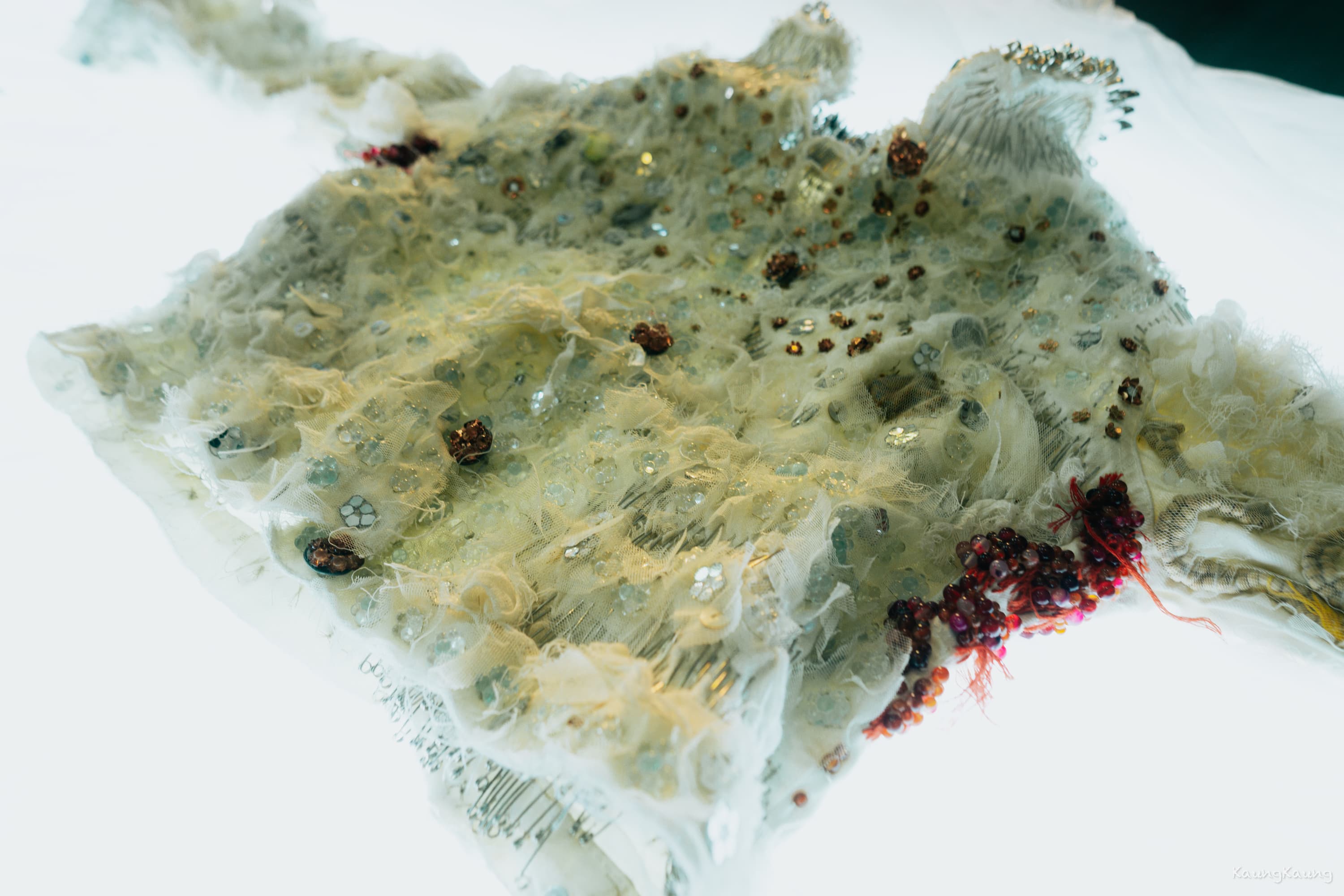
Pulse of a memory
Kyaw Min Htet
ARTIST

About the serie
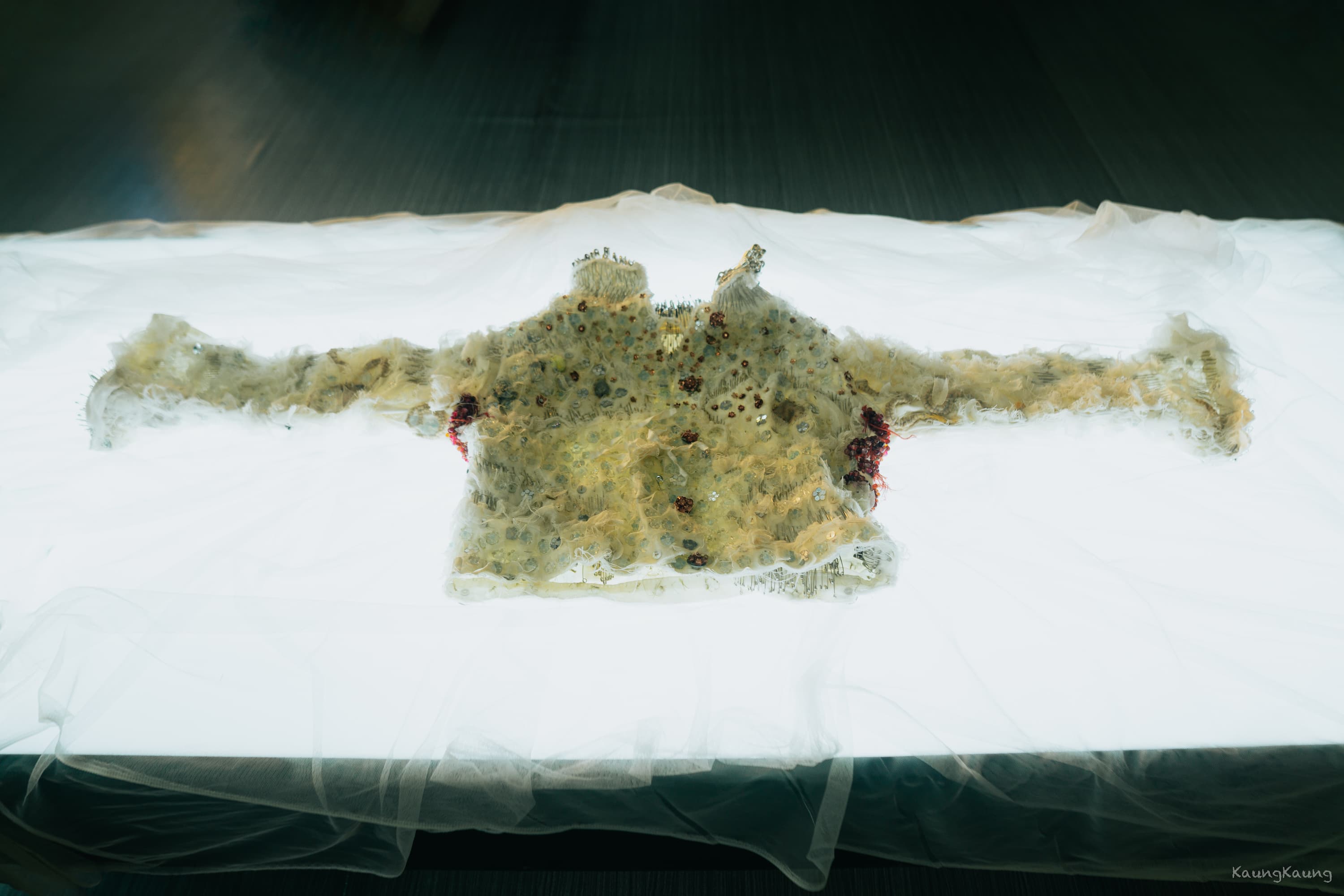
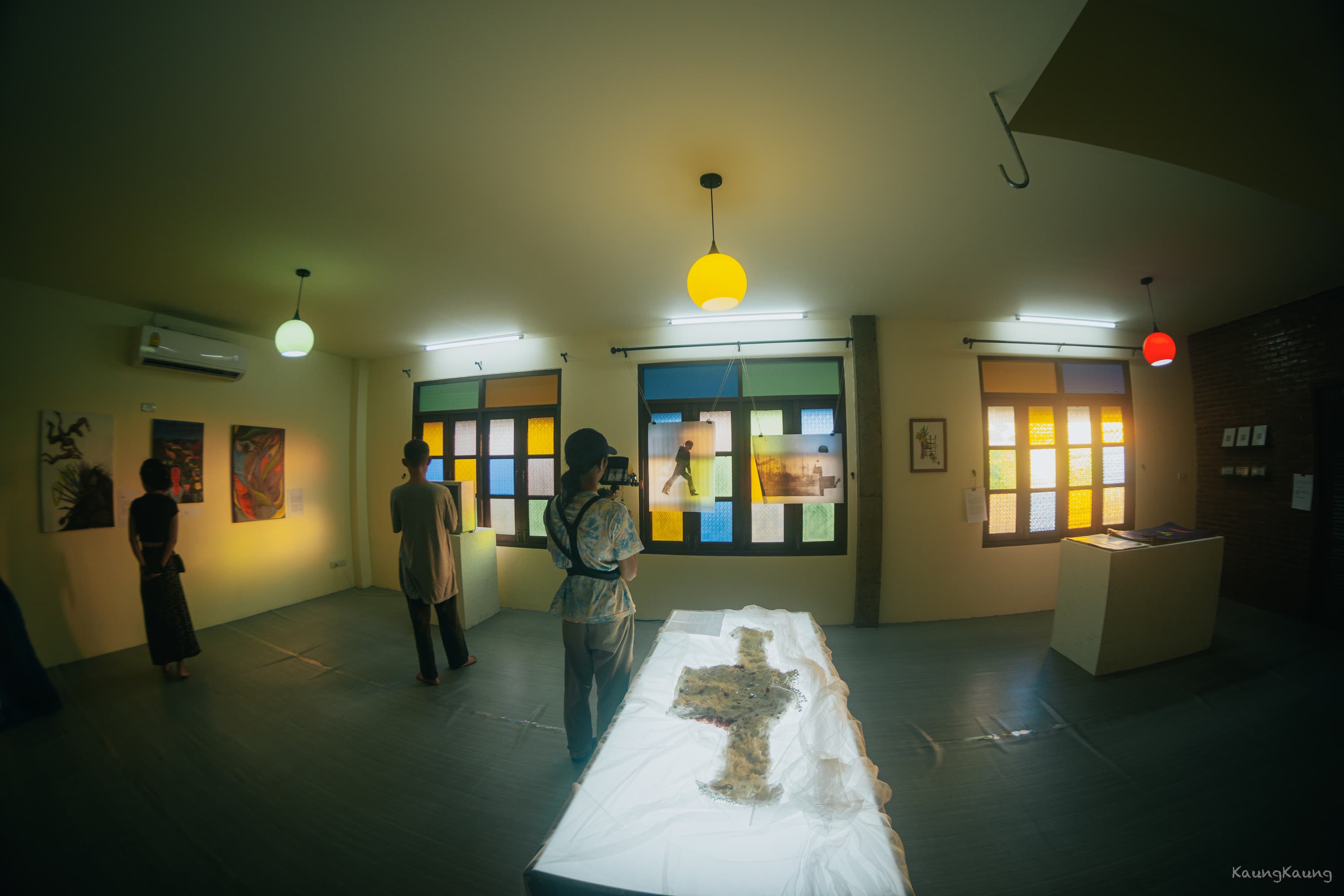
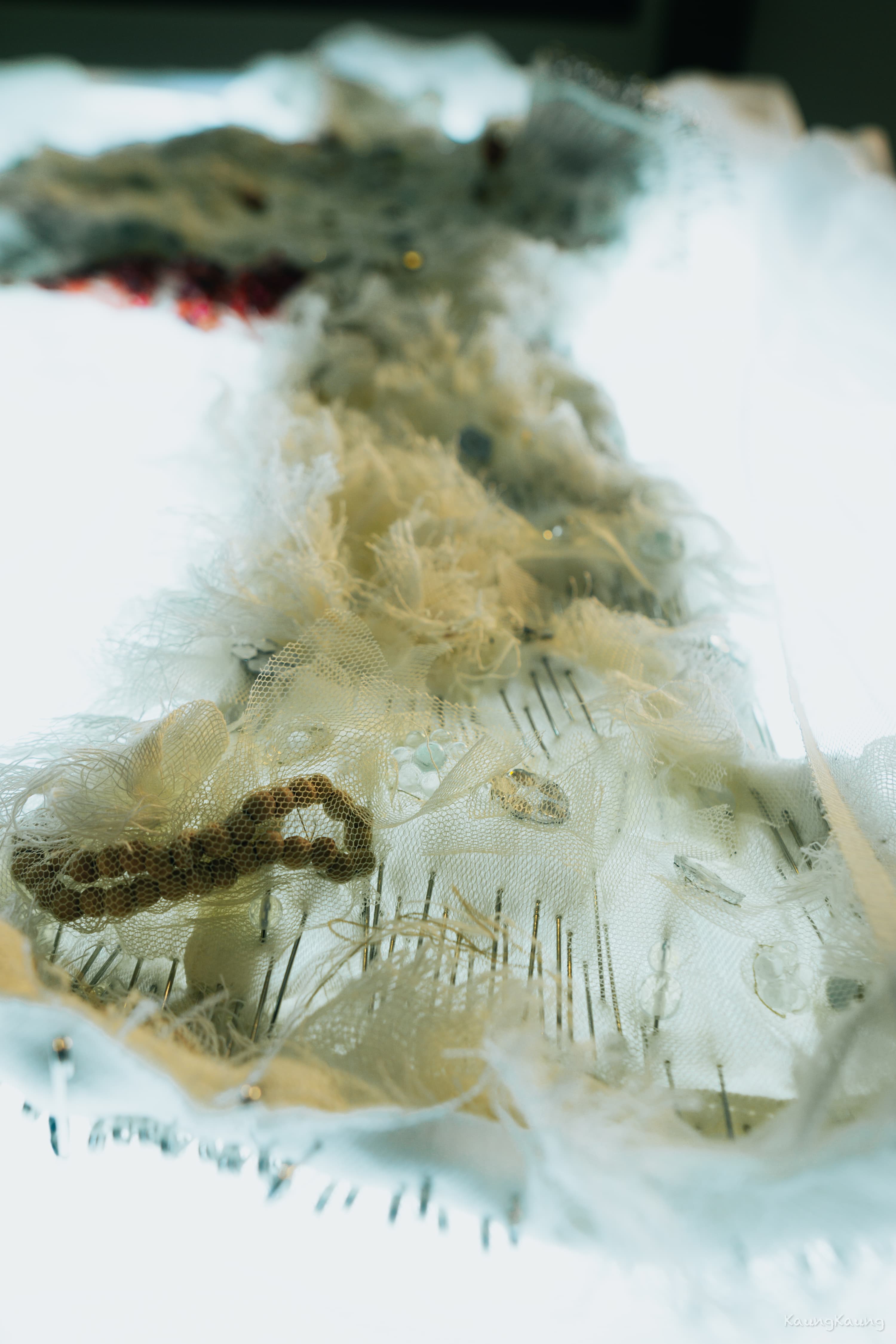
This project draws from various reference points, classic biblical imagery, Christian relics, and couture maisons, reinterpreted through my own visual language. At its core is the Myanmar proverb "whisper of the bones," which speaks to how martyrs take on a life of their own, becoming symbols in public consciousness. This jacket embodies the idea that those who sacrificed for the revolution live on as relics for those they left behind. It serves as both memorabilia and a relic for the living, a reminder of what was lost and a call to carry their memory forward. A found white jacket, stripped to its most essential form, transforms into an intricate tapestry of grief and devotion through a labor-intensive process of fraying, stitching, and embellishment. Each element carries weight, both emotional and physical, over 3,000 safety pins shimmer like silver threads, layers of fraying cotton patches resemble bandages, while mirror mosaics, glass flower motifs, and moonstone beads shift with the light, suspended in waves of translucent tulle that both reveal and obscure. Wooden prayer beads, mother-of-pearl buttons, and butterfly specimens are encased beneath many layers of tulle. Copper flowers, restrained under star-shaped stitches, bloom across the shoulders and neckline, evoking the imagery of standing under Kha Yay (star flower) trees as blossoms fall. Near the ribcage, clusters of deep orange and fuchsia stone beads form the imagery of dried blood and scabs. Hundreds, possibly thousands, of copper, mirror, and glass flower motifs were meticulously crafted and sewn in, each stitch becoming more difficult from the last. Through the repetitive hours of crafting, layering, and stitching, a story emerged, a mother desperately reconstructing the memory of her son, lost to resistance. She gathers fragments of his fleeting presence, stitch by stitch, the bandages he last wore, the talismans he carried, the memorabilia he left behind. This narrative guided every choice, from material to technique. From a distance, this relic appears as a fragmented, blurring memory. Up close, intricate layers of glass, metal, and translucent fabric emerge. Ultimately, this piece is a relic for the living,a reliquary of grief, devotion, and the weight of loss. Process nots A white jacket in the most basic and unisex form was picked from a flea market and I started the process by cutting the edges of the sleeves and the hem just above the seam, allowing them to naturally fray over time. Initially, I considered simply attaching hundreds and hundreds of safety pins in dense patches but I found cotton scarves from a local market with a beautifully textured, loosely woven fabric. Its natural pleats resulting from being tightly packed into a plastic bag gave it an interesting texture combined with their natural softness. The weaving was so delicate that the fabric began to fray as I worked with it. I cut those cotton fabrics into patches, placed them on the bias, and sewed into the jacket not by needle and threads but by attaching them with safety pins individually. Positioned diagonally, those pins shimmer under the light like silver threads, tying back to the theme of embellished armor. The result was a series of bandage-like cotton patches surrounded by horizontal clusters of metallic threads. I left just enough fabric at the bottom to fray naturally over time, creating cloud-like embroideries that bleed white threads. Individually attaching over 3,000 safety pins and cotton patches created the foundational stage for much more intricate elements. I populated the entirety of the jacker with fraying cotton and safety pins organically almost like how clouds form in nature. Creation of this foundational stage was not predetermined and intuitive, each placement guiding the next. For the sleeves, I shifted to a patchwork style, only attaching the safety pins at the top and bottom of the fabric patches to allow more fluid movement. I introduced tulle patches, some single layered, others doubled. To create makeshift lace, I pressed the tulle patches with paper punchers, cutting imperfect, jagged flower shapes. These uneven silhouettes suggested the idea of decaying lace, worn and fragile. I integrated these patches as patch works into the sleeves. Using small glass spheres as embellishments was a challenge. Initially, I tried attaching them directly with resin, but it lacked structural integrity. I shifted to a method of cutting small tulle patches, arranging the glass beads in different floral configurations, and binding them with resin. The resin seeped into the tulle through the glass beads, creating a durable yet delicate structure. I applied the same technique with small mirror mosaics on tulle patches in different patterns as well. I experimented with various floral arrangements which oscillate between child-like kitschy iteration of flowers to floral motifs found on Burmese embroidery and lacquerware. I crafted hundreds and hundreds if not thousands of those and densely sewn onto the jacket individually and in layers depending on the reflective quality of the motifs. For example, the mirror flower motifs are sewn into first so that they will be obscured by the tulle layers of glass floral motifs but when the light hits them at a certain angle , the mirror flower motifs emerge from the obscurity. The jacket becomes overwhelmed by ghostly waves of tulle and flowers hidden underneath. On the sleeves, glass flowers were scattered between patches of fraying cotton and tulle. The discomfort of sewing into such a dense, layered space with limited mobility and the sheer labor of sewing hundreds and hundreds of embellishments became part of the process, a laborious commitment that mirrored the emotional weight of the project. Wooden prayer beads, objects of devotion and talismans of protection in Burmese culture, were pinned down, encased in tulle fabric and sewn into the jacket. Faceted moonstone beads were attached with safety pins and tulle backing. Those embellishments blend quite well in the layers of tulle patches, only to appear when they reflect light, suggested tears or raindrops. Mother-of-pearl buttons were sewn beneath layers of tulle, reflecting light in the same manner. Copper flower motifs, made with paper punchers and sheets of copper metal with a right thickness, were individually stitched into the jacket with threads creating a star shape at the center of the flowers, a symbol of martyrdom in Myanmar. Those copper flowers referenced star flowers (kha yay), symbolic of humility and quiet strength and they are only positioned near the neck and shoulders to suggest the imagery of standing under those flower trees and blossoms falling onto the shoulder. For the blood stains near the ribcage, I shifted from using red beads and ostrich feathers ,as mentioned in the initial proposal, to deep orange and fuchsia stone beads. These beads with their natural gradient and organic patterns created dense patches resembling grotesque and bloody scabs. Clustered near the rib cage, those beads evoked the idea of wounds with scabs, blood seeping and drying. As a final motif, I began incorporating real butterfly specimens. Placed between stiff and soft tulle layers, the butterflies were sewn onto the chest and bicep areas. Their extreme fragility demanded the highest care of handling during the process. This motif directly referenced the terrarium dress from UNDERCOVER labs SS24. This specific dress and the remains of christian martyrs dressed in elaborately embellished garments started as visual reference for this project. During the process of immense labor and repetitive stitching, I wanted to create a narrative into the pieces, just like how John Galliano did for Margiela. There's a story implied but unspoken, a mother who obsessively stitches remnants of her son, lost during resistance to dictatorship, onto his jacket. These fragments, his clothing, the bandages he last wore, and mementos he carried, are all that remain. The jacket, the only intact piece, becomes her way of piecing together her son’s memory, his presence, and the life he left behind. Stitch by stitch, she builds him again with fragments of him, a desperate act for an impossible task. This story became the quiet whisper of my process, influencing my choice of materials and techniques. The jacket now covered in glass and copper flowers, butterflies, and stone beads, becomes a tapestry of quiet grief and mourning.From a distance, it appears blurred, like a hazy memory. Up close, it revealed layers of intricate embellishments, painstakingly created and stitched into. Ultimately, the jacket becomes a relic for the living, a vessel for the memories of the fallen and tangible object of grief and mourning.
More Series